
Hardfacing flux-cored wire is widely used for repairing and manufacturing wear-resistant parts in mining, crushing, steel rolling and cement industries, such as crusher hammers, liners, chutes, hot rolling rolls and rotary kiln support rollers. Its performance directly determines the service life of workpieces, so customers focus on the following core technical indicators.
First of all, the hardness after overlay welding, marked by HRC, is the most critical indicator. Typical hardness grades cover HRC 55–58 and HRC 60–65. Different grades are developed for different working conditions: room-temperature abrasion resistance, high-temperature resistance for hot rolling rolls, high-impact resistance and pure abrasive wear resistance. It should be noted that wire formulas are customized separately. The grade for high-impact crusher hammers, the grade for pure abrasive wear on chutes and liners, and the high-temperature grade for hot rolling rolls cannot be used interchangeably.
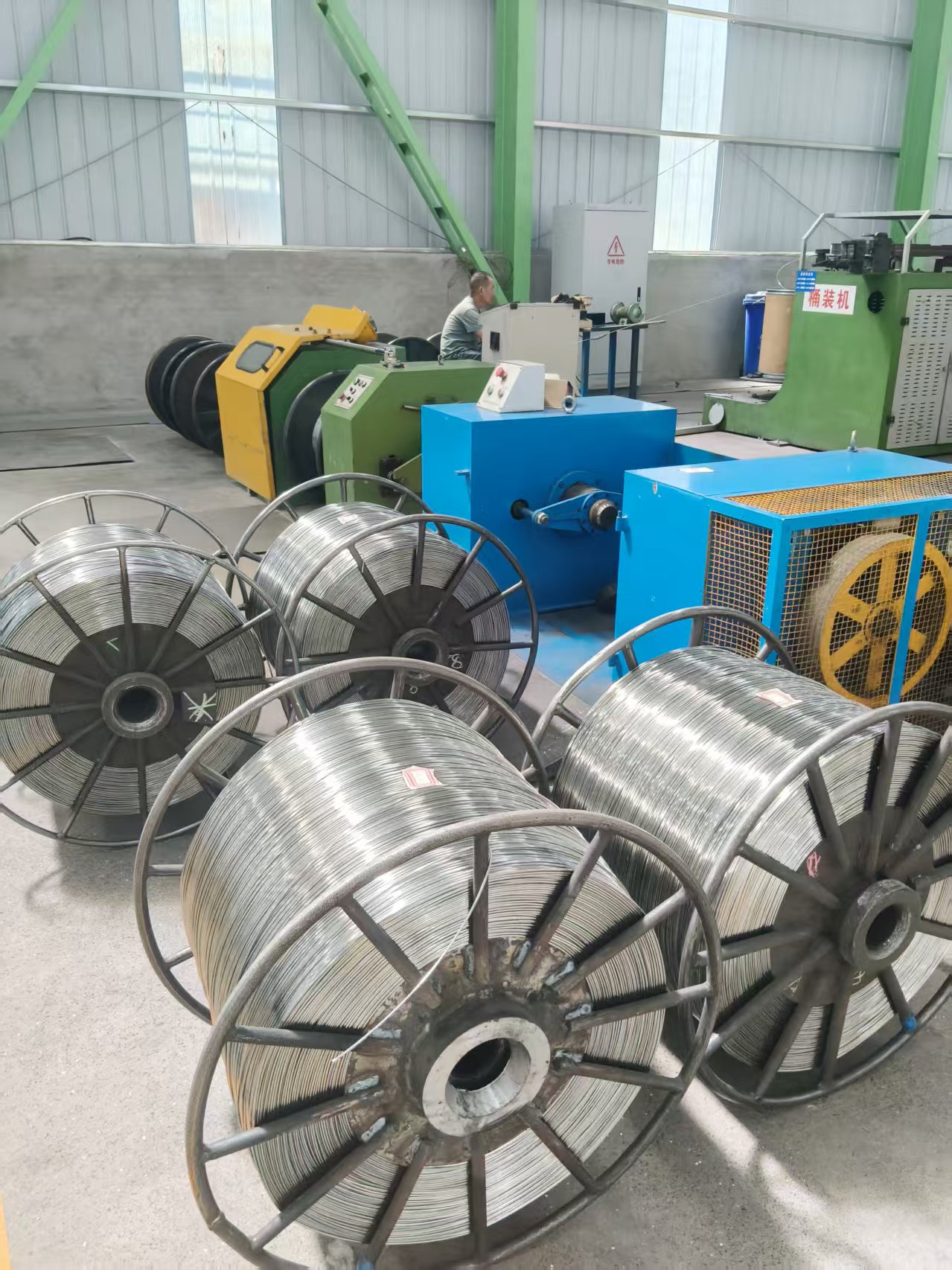
Secondly, metallographic structure and chemical composition are strictly controlled. The contents of Cr, C, Nb, Mo and V are precisely adjusted according to design requirements. Available types include tungsten carbide composite, high chromium cast iron, martensitic and austenitic stainless steel grades. For overseas mining and metallurgical clients, the material test certificate (MTC) can be provided upon request to verify the chemical composition.
Crack sensitivity is another major concern, especially for large-size workpieces like heavy rolling rolls and thick castings. Buyers will check whether the surfacing layer tends to crack, whether multi-layer overlay welding is feasible, and whether preheating and post-weld heat preservation are required during the welding procedure. Unreasonable crack resistance will lead to early peeling and failure of the hardfacing layer.
Customers also pay close attention to the wear service life. They usually compare the working life with products from other suppliers. Field application data and real working cases on crushers, rolling rolls and rotary kiln support rollers are important references for their evaluation.
In addition, welding usability cannot be ignored. Key points include spatter level, slag removability and weld bead formation. Most steel mills and mining factories adopt automatic surfacing equipment, such as open arc and submerged-arc surfacing machines. Good compatibility with automatic welding systems ensures stable feeding, consistent welding quality and high production efficiency.
Post time: Oct-28-2026


