
Solid forged steel rolls are monolithic rolling mill components machined from a single forged steel billet, without any assembled or sleeved outer ring. The whole roll body and shaft ends are integrally formed by forging, followed by heat treatment, rough turning, finishing turning and precision grinding.
A wide range of alloy steel grades can be selected according to rolling working conditions, including Cr-series alloy steel, high-chromium forged steel, semi-high-speed steel and high-speed steel. Through optimized quenching and tempering plus surface hardening treatment, these rolls achieve balanced performance: high tensile strength, good toughness, strong resistance to thermal fatigue and excellent wear resistance. Unlike composite rolls, there is no bonding interface between different materials, eliminating the risk of ring loosening or detachment under heavy cyclic rolling loads.
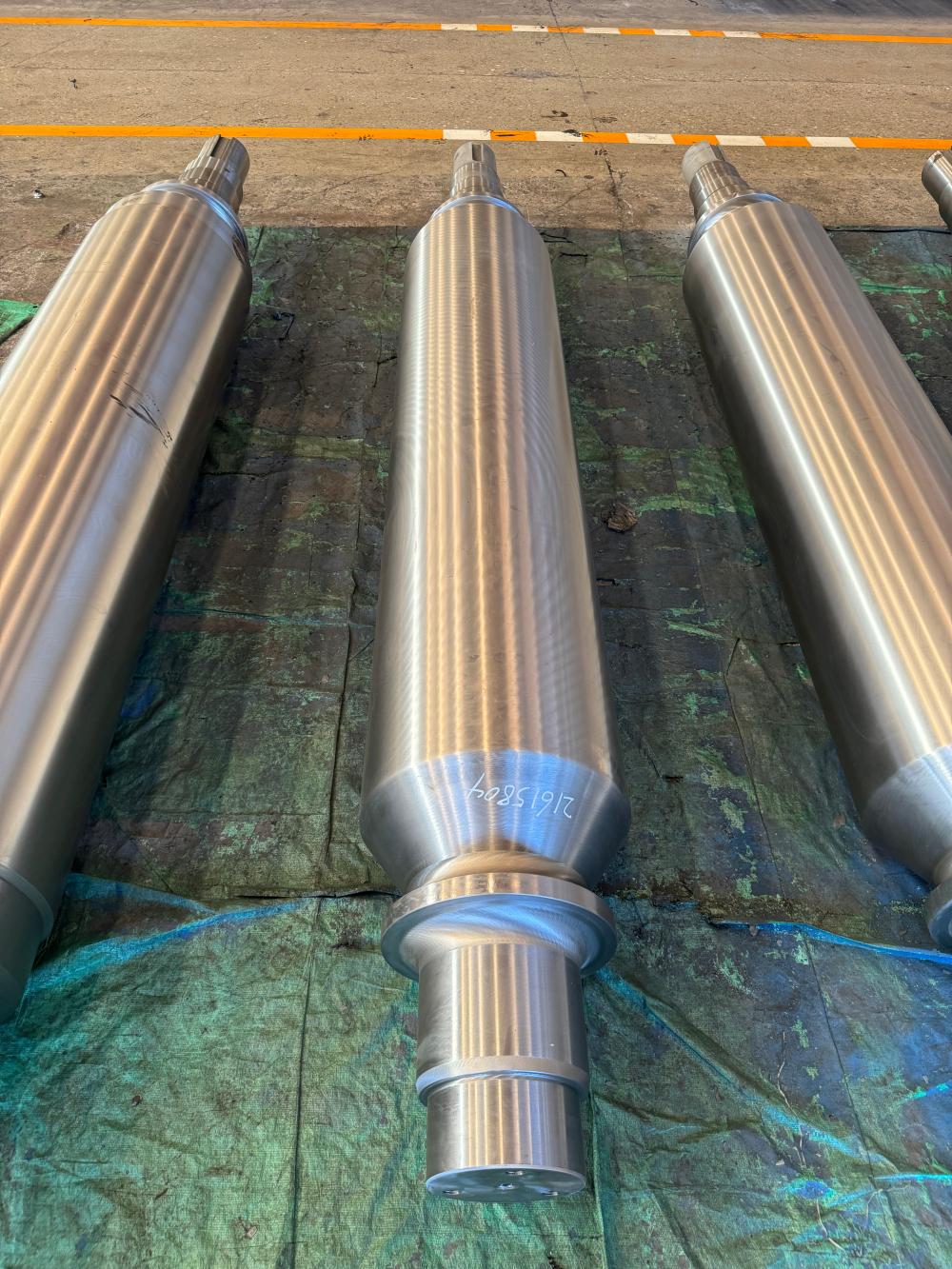
Solid forged steel rolls are widely applied in heavy-load rolling processes. Typical application scenarios include seamless steel pipe mills, plate and medium plate rolling mills, heavy bar and large section steel rolling stands. They are also used as backup rolls and work rolls for cold rolling lines.
Their prominent advantages lie in high structural integrity and reliable impact resistance. The integral forging structure can withstand heavy rolling pressure and occasional impact loads. Proper heat treatment enables the roll surface to maintain hardness while keeping the roll core tough, effectively resisting thermal crack propagation and surface peeling during continuous hot rolling.
During production, strict non-destructive inspection such as ultrasonic testing is carried out to detect internal forging defects, inclusions and voids. Precision grinding ensures excellent surface finish and tight dimensional tolerance, guaranteeing stable size and surface quality of rolled steel products.
However, solid forged steel rolls have limitations in wear resistance compared with tungsten carbide composite rolls. Under high-speed and long continuous rolling conditions, the roll groove wears faster and requires more frequent regrinding. Grade selection and heat treatment scheme must be customized based on rolling force, rolling temperature, workpiece material and production rhythm.
In summary, solid forged steel rolls are a mature and reliable choice for heavy-duty rolling mills. Their one-piece forged structure delivers outstanding structural stability and impact resistance, making them indispensable core consumables for plate, large section steel and seamless tube rolling production.
Post time: Oct-16-2026


