
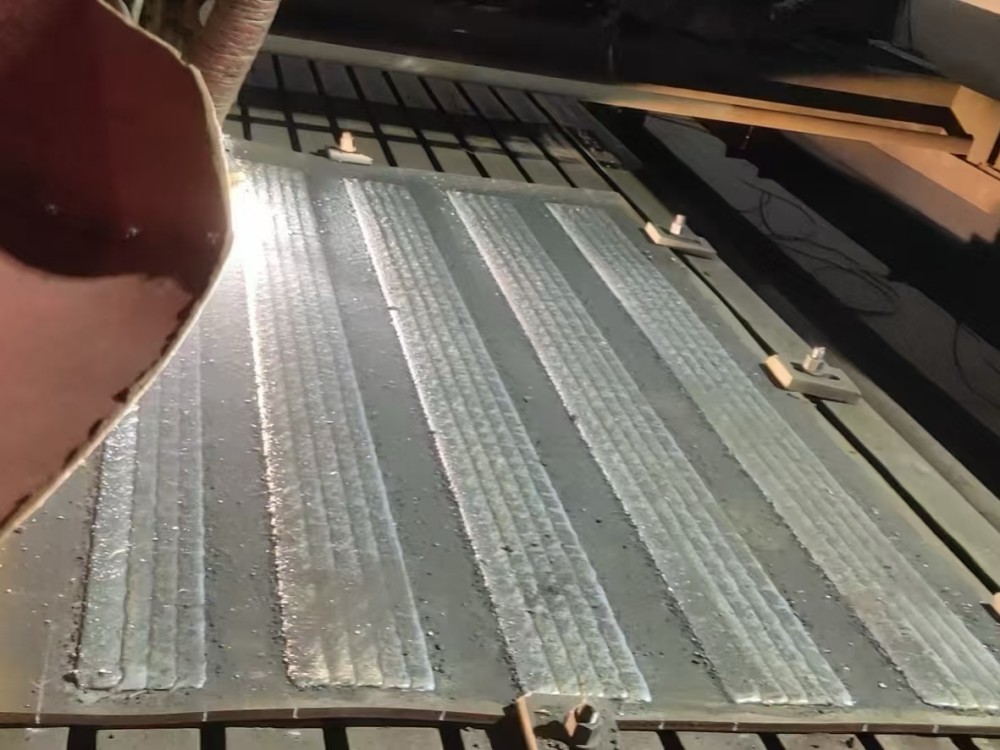
Chromium carbide overlay wear plate is a bimetallic metallurgically-bonded composite plate. It consists of a mild-carbon steel base substrate and a high-chromium hard-alloy overlay deposited by automatic open-arc hardfacing welding, with surface hardness reaching HRC 58-65.
Key Advantages
-
1.Excellent Wear Resistance
Abundant Cr₇C₃ hard carbides are formed within the overlay layer. Its abrasion resistance is 15-20 times that of ordinary carbon steel, 2-3 times higher than rolled NM series wear-resistant steel plates. Under abrasive erosion conditions, its service life is 3-5 times longer than ordinary high-manganese steel castings. Ideal for abrasive particle wear and high-speed material scouring scenarios.
-
2.Bimetallic Structure for Moderate-Impact Resistance
The Q235/Q345 tough steel substrate bears impact loads while the top layer delivers high hardness. The hardfacing layer is metallurgically fused to the base, resisting large-area spalling. Compared with solid high-chromium cast iron, it is less prone to cracking and chipping.
-
3.Good Processability & Flexible On-Site Adaptation
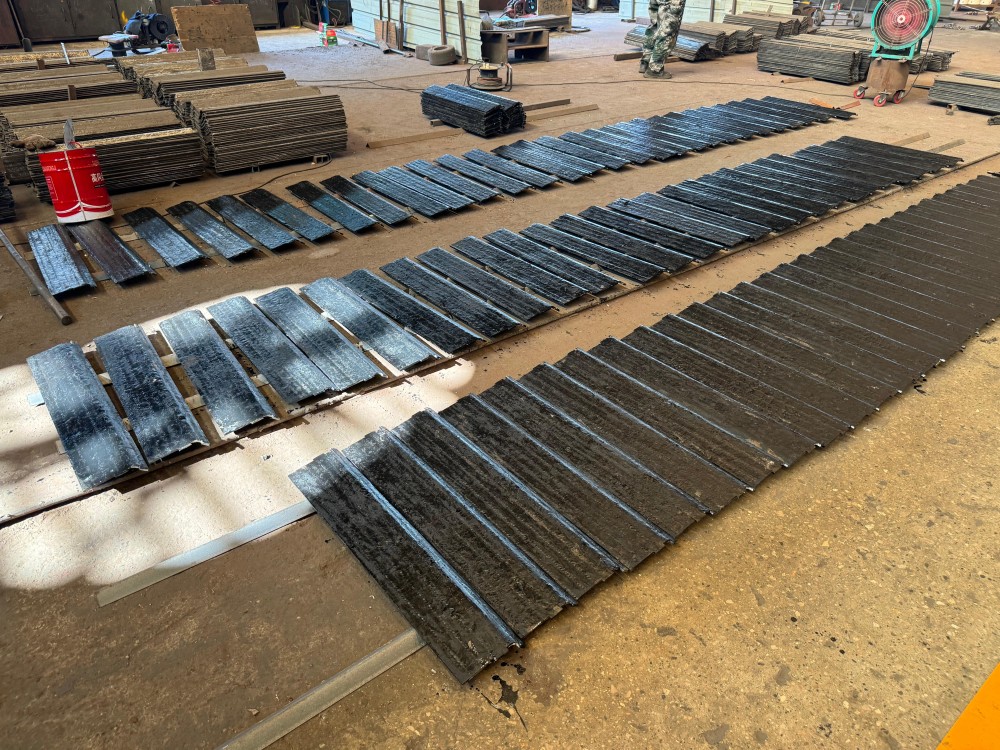
Supports plasma cutting, drilling, bending and rolling to produce curved liners. Welding and bolt-on installation are feasible (welding shall only be performed on the substrate side). Custom cutting-to-size is available without casting moulds, enabling short lead-times for small-batch orders.
-
4.High-Temperature Performance
Stable long-term service up to 550-600 °C. The hardfacing layer resists softening under high-temperature wear, suitable for cement plant coolers, cyclones and coal-fired power pipelines.
-
5.Repairability & Lower Maintenance
There is no need to scrap the whole component when only the overlay surface wears out. On-site re-hardfacing repair is achievable. Partial single-piece replacement reduces spare-part costs and equipment downtime.
-
6.Cost-Effective Solution
Expensive high-chromium alloy is applied only on the wear-facing surface while low-cost carbon steel serves as the base, optimizing material utilization. Without mould investment for small-batch orders, overall operation and maintenance costs are greatly reduced.
-
7.Flexible Customization
Substrate thickness and hardfacing overlay thickness (3-12 mm) are customizable. Flat plates, curved segments and special-shaped liners can be manufactured for direct assembly in chutes, hoppers and transfer points.
 |
 |
Limitations for Reference
1.Fine network stress cracks on the overlay surface are normal manufacturing characteristics. They do not impair wear performance but cannot sustain heavy violent impact.
2.Welding operations must not be carried out directly on the hard-faced overlay layer.
Typical Applications
Chute liners, hopper liners, transfer-point wear plates for mining; grate coolers, cyclone liners and pipelines for cement plants; coal-handling & ash-removal systems for thermal power plants; unloading and silo protection for port facilities, mainly for scouring-wear working conditions.
Post time: Sep-07-2026


